


CHANDRAYAAN 2 SECOND ATTEMPT IS VERY SUCCESSFUL AS BEING INDIAN I AM VERY PROUD TO WRITE THIS BLOG.
Chandrayaan-2 is India’s second lunar exploration mission after Chandrayaan-1 Developed by the Indian Space Research Organisation (ISRO). the mission was launched from the second launch pad at Satish Dhawan Space Centre on 22 July 2019 at 2.43 PM to the Moon by a Geosynchronous. Satellite Launch Vehicle Mark III (GSLV Mk III). All Parts of this Program are Totally Made In India.
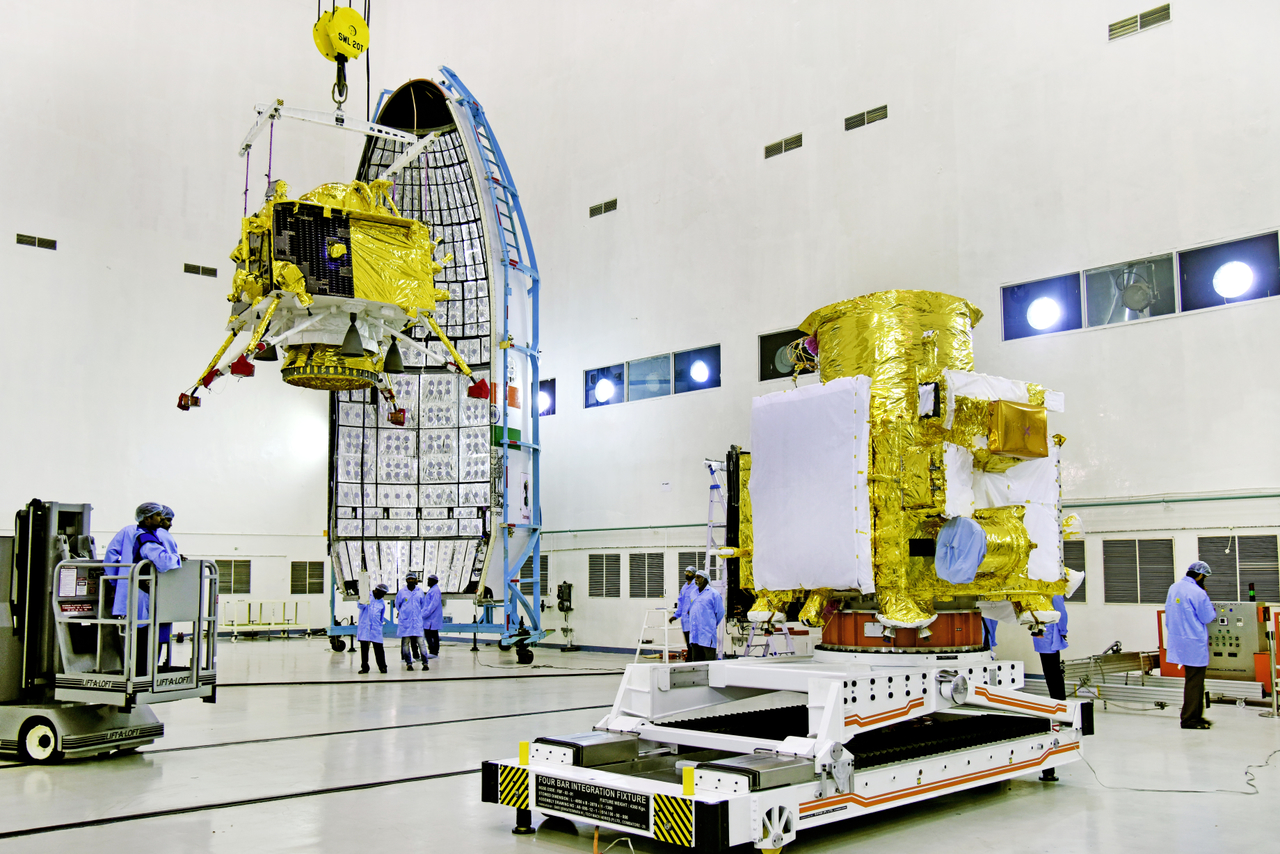
Chandrayaan-2 is an Indian mission to send an orbiter, lander, and rover to the Moon. The 3 vehicles launched as 1 combined spacecraft to lunar orbit, where the lander, carrying the rover, will touch down in the Moon’s southern hemisphere. The orbiter will then continue studying the Moon from above. A successful mission would make India just the fourth country to soft-land on the lunar surface.
The mission builds on ISRO’s Chandrayaan-1 orbiter, which launched in October 2008 and operated for 10 months. Chandrayaan-2 features improved instruments and new technologies intended for future planetary missions. The orbiter is planned to operate for one year (previously reported as 2 years), while the lander and rover are expected to survive one lunar daytime period—14 Earth days—their mission ending when night falls.


| Start of mission | |
|---|---|
| Launch date | July 22, 2019, 14:43:12 IST (09:13:12 UTC) |
| Rocket | GSLV Mk III |
| Launch site | Satish Dhawan Space Centre Second Launch Pad |
| Contractor | Indian Space Research Organisation |
| Orbital parameters | |
|---|---|
| Periapsis altitude | 100 km (62 mi) |
| Apoapsis altitude | 100 km (62 mi) |
| Moon lander | |
| Spacecraft component | rover |
| Landing date | 7 September, 2019 (planned) |
The mission has an allocated cost of ₹978 crore (approximately US$141 million) which includes ₹603 crore for space segment and ₹375 crore as launch costs on GSLV Mk III.
ISRO ACHIEVEMENTS
| 105 |
Spacecraft Missions |
|
* Including 3 Nano Satellites, 1 Micro Satellite |
| 75 |
Launch Missions** | |
|
** Including Scramjet-TD & RLV-TD |
| 10 |
Student Satellites |
| 2 |
Re-entry Missions |
| 297 |
Foreign Satellites*** | |
| *** of 33 Countries |
Missions
| Trending | Latest Missions | Future plan | |||
| Mars Orbiter Mission | GSLV-Mk III -M1 / Chandrayaan-2 Mission | ||||
| LVM3-X (CARE) | PSLV-C46 Mission | Chandrayaan-3 | |||
| AstroSat |
“JAI HIND JAI ISRO”
~kamal swami
 Blog-Block